
¶ 6: The Eve of Spring
There came a time near dawn on the eve of spring, and Lúthien danced upon a green hill; and suddenly she began to sing. Keen, heart-piercing was her song as the song of the lark that rises from the gates of night and pours its voice among the dying stars, seeing the sun behind the walls of the world; and the song of Lúthien released the bonds of winter, and the frozen waters spoke, and flowers sprang from the cold earth where her feet had passed.
The rest of this post may pass quickly in comparison to the first five ¶’s. The remainder of the material we are analyzing is displayed in the series, and most of the parallels are fairly intuitive, so the need for extensive explanations will hopefully decrease.
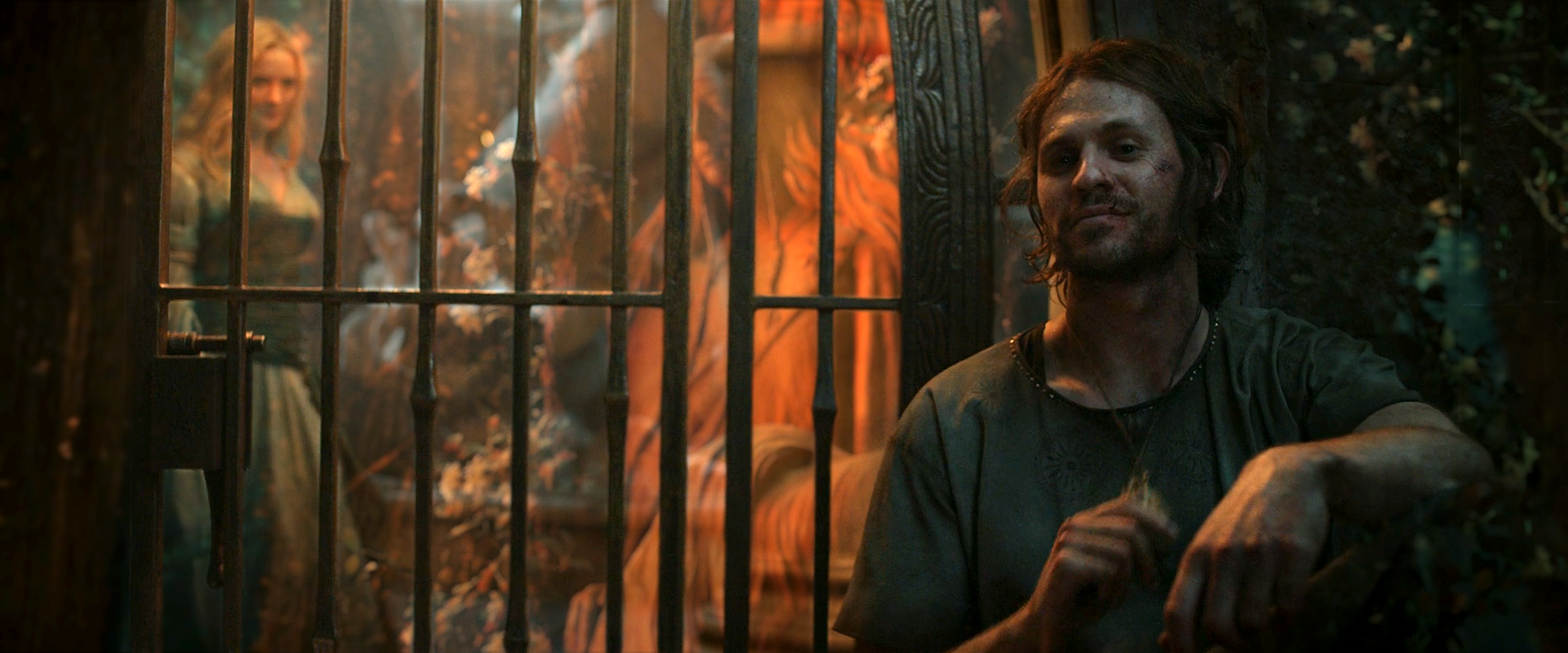
Beren watched Lúthien for a long time, so it is no stretch to jump from the end of the First Age to the end of the Second Age for Sauron and Galadriel. The off-screen timeline has ended, and we venture into things we have seen, beginning on the boat to Valinor.
There came a time near dawn on the eve of spring, and Lúthien danced upon a green hill; and suddenly she began to sing.

For whatever reason, the Elves had until spring to either leave Middle-earth or devise a solution to their fading.
Elrond: “What seems to be the difficulty?”
Celebrimbor: “I need it completed by spring” (1×02).
We do not know exactly how much time that was, but it seemed to have approached speedily enough for us to classify this as “the eve of spring.” There are many inverses, so for brevity:
- There came a time near dawn on the eve of spring.
- And Lúthien danced upon a green hill.
- And suddenly she began to sing.
- There came a time near dusk on the eve of spring.
- And Galadriel stood upon a ship in the sea.
- And suddenly everyone besides her began to sing.
Differences in mood are worth noting. Lúthien was happy, and Galadriel was somber and anxious.
Keen, heart-piercing was her song as the song of the lark that rises from the gates of night and pours its voice among the dying stars, seeing the sun behind the walls of the world; and the song of Lúthien released the bonds of winter, and the frozen waters spoke, and flowers sprang from the cold earth where her feet had passed.
There are Night and Day inverses here, as well, such as “the song of the lark that rises from the gates of night,” versus the song of the birds that rose from the gates of Valinor. The parallel lies in the power of the songs that were sung. Lúthien’s song released the bonds of winter, and the song of the Elves opened the gates to “the land of winterless spring.”
