
Regroup
Now, we return to the comparisons with Beren and Lúthien. First, step back and think about the nature of our discussion.
Why would Sauron’s supposed redemption arc be so close to Beren’s story? Would J.D. Payne and Patrick McKay read Of Beren and Lúthien in the writers’ room and think it would be cool to make Halbrand’s journey exactly like Beren’s, to the letter, with little to no deviation… just for fun?
I obviously cannot speak to what they did and did not decide to do, but my suspicions lean toward them being purposeful more often than not. Here is why:
We’re not really coming from a place of wanting to add Easter eggs, although that’s there, too. We’re coming from a place of wanting to create something that is as visually sumptuous and rich as those books are, literarily. If you like the show, hopefully, maybe you’ll watch it again and you’ll notice all kinds of new things, whether it’s something in the dialogue, or something in the set design, or something in the costuming, that is hopefully communicating a whole other layer of meaning. And if you’re a fan, there’s no end to the deep dive you could be doing.
The Silmarillion is written as a history recorded by the Elves. Everything written about Beren and Lúthien was known to the general population of Arda, whether by rumor, legend, history, or even first-hand, long before Sauron named himself Halbrand.
“…for the deeds of Beren and Lúthien were sung in many songs throughout Beleriand.”
Of the Fifth Battle: Nirnaeth Arnoediad
Although Sauron was fundamental in their story, and acquainted with both Beren and Lúthien, he did not and would not know everything about them until songs were sung throughout Beleriand. And once he heard those songs, Beren’s whole life would unfold to Sauron’s view, as well as the impossible things Beren and Lúthien accomplished together, which literally shaped the fate of Middle-earth.
How would Sauron successfully appear repentant, even to the very gods, all while attempting to become greater than them and immune to their wrath? Would he not want to base his whole persona off one of the greatest and most honorable beings who ever lived? If he “self-styled himself” as the person that Galadriel would trust, what better Man off whom to base appearances than Beren, for whom her brother died?

Would she not remember that the meeting of Beren and Lúthien was no chance-meeting, but the work of something greater? Would she not assume that the same powers were at work in bringing her to Halbrand? (Not to forge the same type of relationship, of course, but to bring about a great purpose.)
From her assumptions, she would do all in her power to ensure the fulfillment of Halbrand’s destiny: To become the great King of Men, who would unite the scattered tribes of the Southlands under one banner, against the evil that then sought to claim their lands—his lands.

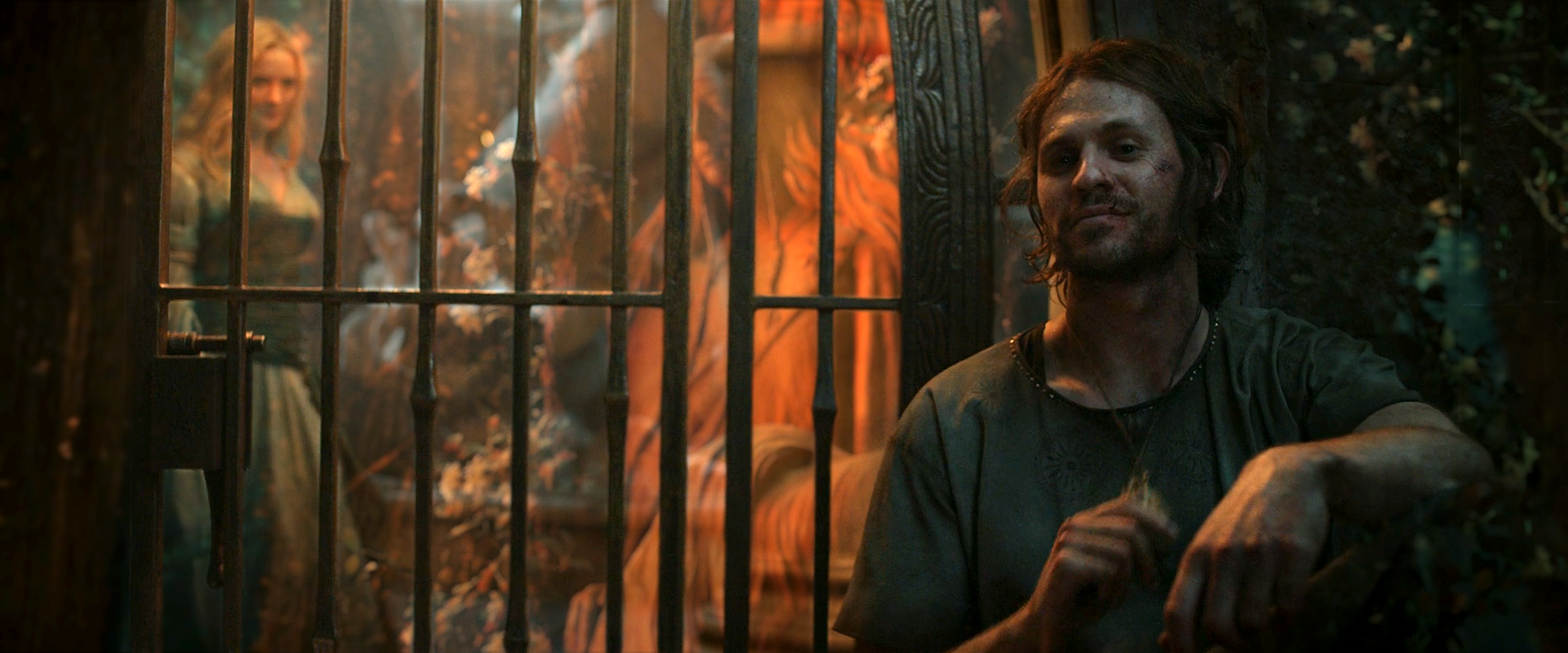
Galadriel: “Your people have no king, for you are him.”
Sauron: “That’s an odd thing to say to a Man in a cage.”
Galadriel: “A cage you have landed in because you chafe under the rags of the common, and the armor that ought to rest upon your shoulders weighs upon your soul” (1×03).
Sauron is not stupid. He knew that she would recognize similar traits. None of the parallels in this entire post seem to be mere Easter eggs.