
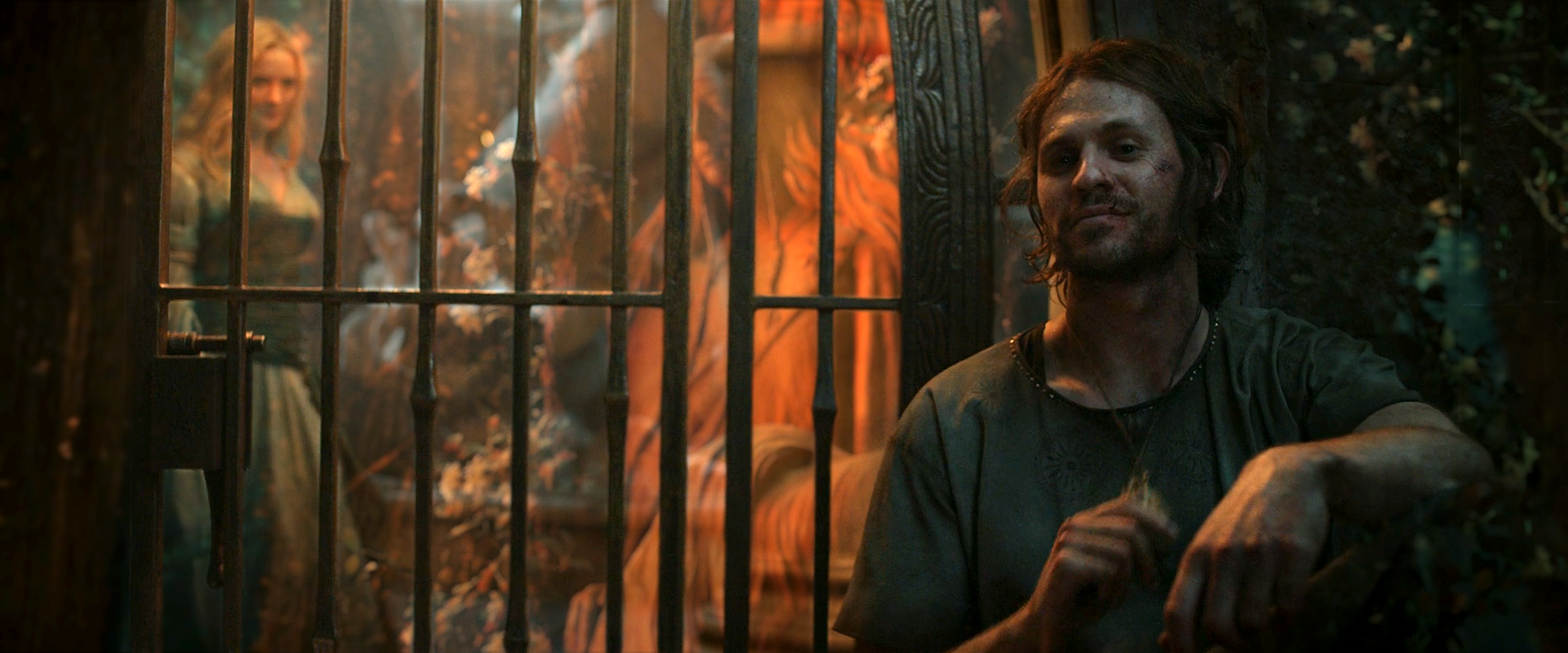
Recap
We have briefly spoken about the oath and death of Finrod, and the quest of Beren.* We have discussed Galadriel’s obsession as being the result of Sauron calling her to him and augmenting her one-track-mind for his own benefit; this is manifested most clearly by the events of the boat scene.*
* My perspective on Galadriel’s knowledge of Finrod’s part in Beren’s quest has slightly changed, and you will see why. The fact remains, however, that the account was twisted in Galadriel’s mind.
* See: Galadriel’s Obsession Part 4: The Boat
In Sauron and Sincerity, we determined that Sauron rising as a shadow of Morgoth and a ghost of his malice proves that he and Morgoth share the same motives:
“And he feigned, even to himself at first, that he desired to go thither and order all things for the good of the Children of Ilúvatar, controlling the turmoils of the heat and the cold that had come to pass through him.

“But he desired rather to subdue to his will both Elves and Men, envying the gifts with which Ilúvatar promised to endow them; and he wished himself to have subjects and servants, and to be called Lord, and to be a master over other wills.”
Ainulindalë
Sequence of Events
J.D. Payne and Patrick McKay took great care in their decisions, and are not changing the timeline as much as is commonly accepted. The series did not begin at the beginning of the Second Age, but rather the tail end of it.
What was important to the Tolkien Estate was the principle of the narrative flow and the sequence of events, not the dates. The rings are made here, there’s a war between Sauron and the Elves after that, a later Sauron is taken to Númenor, Númenor falls, Gondor is established, and you end up with the Battle of the Last Alliance. Does it matter if a hundred or 500 years passed between those events? No.
Here is one misconception they correct:
One more indication that they are not “playing with the timeline” is, of course, Míriel’s remark to Elendil:
“And yet, though Elves have been unwelcome on our shores since the reign of my grandfather’s great grandfather, you chose to break with that precedent” (1×03).
The timeline is not a jumbled mess; it is compressed. Even so, the time compression simply entails shifting the events that Patrick listed to the end of the Second Age, instead of having them span over three thousand years. Everything else stays the same. The anchor point is the forging of the Rings, and the major events naturally follow suit.* The actual duration of the Age has not changed at all, and evident by Míriel’s above mention of the generations, it would seem that her third great grandfather (Ar-Adûnakhôr) still reigned in the year 2899 S.A.
* This is why, in the show, Isildur is alive when the Rings are made, instead of a thousand years after. The making of the Rings and all that followed was copied and pasted at the very end.
Therefore, we will not be hindered by disclaimers or what-ifs in the timeline. We can assume Sauron’s thoughts and actions prior to the forging of the Rings are synonymous in the show and books, and from there, we can discover his whereabouts immediately preceding the raft.

Sauron’s attempt to repent began with kneeling at the feet of Eönwë, after Morgoth was defeated; but Morgoth did not fall yesterday.
“Year gave way to year. Century gave way to century. And for many Elves, the pain of those days passed out of thought and mind. More and more of our kind began to believe that Sauron was but a memory, and the threat, at last, was ended” (Galadriel, 1×01).
“For though Morgoth fell an age ago, some feared a new evil might arise from his shadow. So, for centuries now, these soldiers have swept across crag and crevice…” (Gil-galad, 1×01).
The nature of Sauron’s subsequent aspirations (described by Adar) prove that his motives, though initially “fair,” had darkened long before the show began.
“I sacrificed enough of my children for his aspirations” (Adar, 1×06).
“Halbrand” only ever represented Sauron’s repentant phase—he had to be convincing—but his actual penance was an age ago, and by the time we meet him, he has been at work for centuries.
“Elsewhere in Middle-earth there was peace for many years; yet the lands were for the most part savage and desolate, save only where the people of Beleriand came. […] And in the south and in the further east Men multiplied; and most of them turned to evil, for Sauron was at work.”
Of the Rings of Power and the Third Age
Sauron had no need to wait until the audience could see him before beginning and furthering his work; and we know, with certainty, what this work entailed. He imprisoned Finrod a while before Morgoth fell, during which time he sought for a power of the unseen world.

Galadriel: “No, you died. Along with countless others because of him.”
Sauron as Finrod: “No, Galadriel. He was seeking a power. Not to destroy Middle-earth, but to heal it” (1×08).
After Morgoth’s defeat, Sauron had the freedom to devote himself to the rehabilitation of Middle-earth; instead of seeking the power, he sought to craft it. He bid as many as he could to follow him far north, where he was at the command of a legion of Orcs, and the one missing piece of the craft—not an object, but a shadow of dark knowledge—kept itself hidden, even from him, no matter how much blood he spilt in its pursuit.

At some point, Sauron endeavored to sow lies among the peoples of Middle-earth. “Long was he at work, and slow at first and barren was his labour.” The continuation of the afore-quoted excerpt from the book describes Sauron’s thoughts and actions earlier in the age (likely after Adar betrayed him).
“Seeing the desolation of the world, Sauron said in his heart that the Valar, having overthrown Morgoth, had again forgotten Middle-earth; and his pride grew apace. He looked with hatred on the Eldar, and he feared the Men of Númenor who came back at whiles in their ships to the shores of Middle-earth;* but for long he dissembled his mind and concealed the dark designs that he shaped in his heart.”
Of the Rings of Power and the Third Age
* Sauron certainly witnessed Númenóreans come and go before he was on the raft. Númenóreans had already been colonizing Middle-earth, apparent by the Southlanders going to Pelargir, “an old Númenórean colony.”
The clause “for long he dissembled his mind,” shows that he thought all of this long before he met Galadriel; and he had a plan, or at the very least, a goal. He just needed to set the groundwork and find that one piece of dark knowledge before he could take the first steps of that plan. It is extremely important to note that in the first season, he already hated the Elves and feared the Númenóreans, and those two races were even the main targets of his dark designs, as implied by the book.
How much time passed before Galadriel found him on the raft?

Thondir: “Surely, it is lost to the ages now. Whatever happened here was long ago. […] The mark is centuries old. Whoever left it could be long dead.”
Galadriel: “Or lying in wait, gathering strength, perfecting whatever dark art eluded him here!” (1×01).
In order for an art to be perfected, it must be practiced. Sauron’s art is of the unseen world, “some dark sorcery of old.” After Adar’s betrayal, he had a lot of time to do many things.

The story of Beren and Lúthien made me more fully understand exactly why J.D. Payne, Patrick McKay, Charlie Vickers, and Morfydd Clark describe the connection between Sauron and Galadriel as cosmic instead of romantic—they are the perfect inverse of Beren and Lúthien.
Patrick often says, “It’s all there,” with a lot of these things. The parallels were so overwhelming to me, as well as many hints toward Sauron’s pre-raft path, it took me nine months to write this essay. Sometimes, one thing in the book connects with several things in the series, and vise versa, so we must draw from one century to another; and of course, many things that took days or weeks for Beren spanned centuries for Sauron.
We shall dissect each paragraph of The Silmarillion: Of Beren and Lúthien, beginning after Beren retrieved his father’s ring, and concluding before he was brought to King Thingol.